Architecture matters: Unlocking the full potential of ZIF-8 for cleaner water
Multilayered and exfoliated ZIF-8 architectures for more efficient pollutant removal
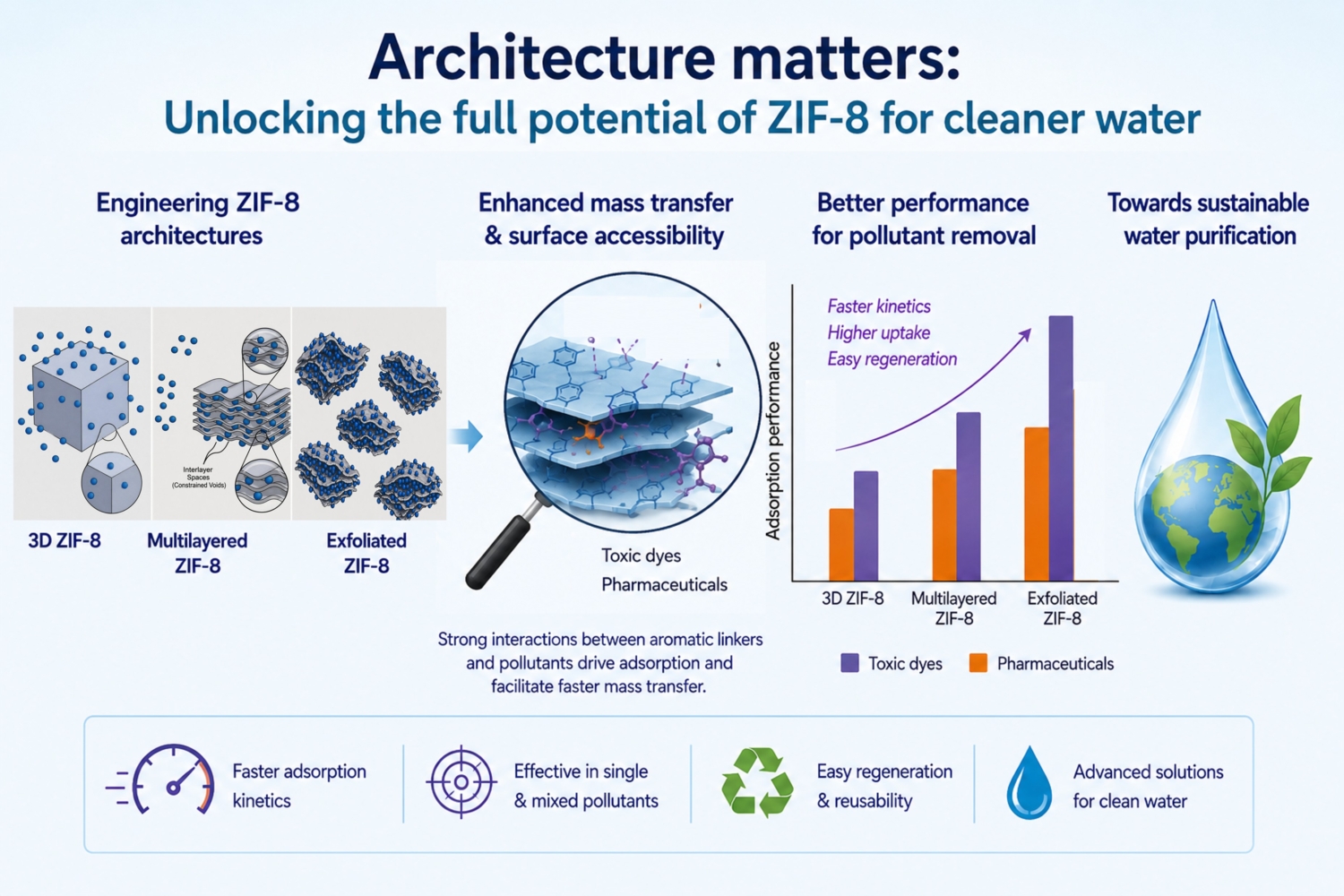
Metal–organic frameworks (MOFs) offer remarkable potential for a wide range of applications, including water purification. However, their performance depends not only on their chemical composition but also on their architecture.
A recent study explores how engineering the structural architecture of ZIF-8 can improve mass transfer and surface accessibility. By transforming the conventional three-dimensional framework into multilayered and partially exfoliated architectures, the researchers increased the accessibility of adsorption sites and accelerated the removal of toxic organic pollutants from water.
The optimized ZIF-8 architectures also maintained higher performance during reuse cycles, remained effective for removing multiple pollutants from mixtures, and could be efficiently regenerated.
These findings demonstrate that architectural engineering can play a key role in improving the efficiency and reusability of MOF-based materials, opening new opportunities for more sustainable water purification technologies.