Aqueous polymorph and morphology control in ZIFs via 1-methylimidazole for efficient lipase entrapment
A clear link between synthesis, structure, and enzyme performance
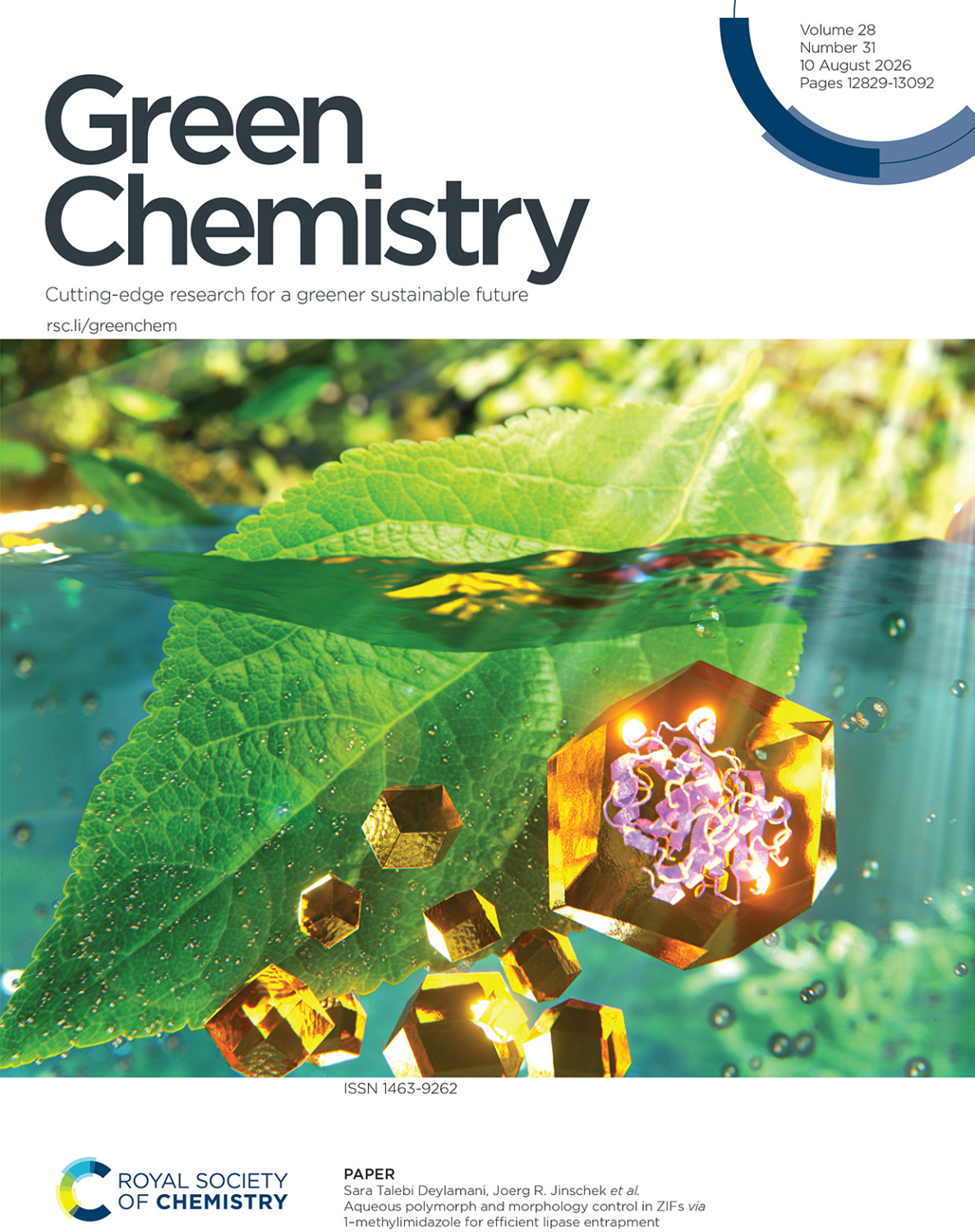
Enzymes are remarkable catalysts: fast, selective, and efficient. However, they can also be fragile. Entrapping enzymes in metal–organic frameworks (MOFs) can help protect them, but conventional MOF synthesis often relies on organic solvents or large excesses of chemical building blocks.
In this work, the addition of a small amount of 1-methylimidazole as a modulator enables control over ZIF formation in water, directing phase selection from layered, sheet-like ZIF-L to a three-dimensional porous ZIF-8 framework.
Particularly interestingly, the mixed-phase ZIF-L/ZIF-8 material showed the best overall performance for lipase entrapment, providing an effective balance between enzyme loading and retained catalytic activity. This offers a simple way to connect synthesis, structure, and enzyme performance while keeping the synthesis water-based. The work represents a step toward the more rational and biocompatible design of enzyme–MOF biocomposites for biocatalysis and related applications.